
Most AEO programs generate insights. Few generate backlogs.
Without a backlog, every snapshot restarts emotional history: surprise, blame, screenshots, drift. With one, visibility work looks like product work—ranked, owned, shippable.
What belongs in an evidence repair backlog
Each item should point to something fixable in the world:
- Wrong or stale owned URL
- Conflicting fact across surfaces
- Missing citeable section (comparison, specs, definition)
- Harmful earned source that needs outreach / counter-publishing
- Measurement debt (peer set, prompt tag)—labeled separately from brand evidence
If an item is only "improve brand perception," it is not backlog-ready. Rewrite it until there is a URL, a fact ID, or a named source action.
A simple ticket schema
- Prompt cluster affected (IDs / tags)
- Symptom (absence, bad frame, bad citation)
- Artifact (URL or fact ID)
- Owner / DRI (a person, not a department)
- Severity (P0 conflict cited now → P3 polish)
- Success signal (e.g., citation drops; framing term frequency falls)
- Re-measure date
- Dependency (legal, product, PR) when the fix is blocked outside marketing
Pull symptoms from BrandAEO; enrich context in Brand Hub. When the gap is encyclopedic or naming-related, pull BrandWiki into the ticket notes so owners see the factual spine, not just the screenshot.
Ranking rule that prevents politics
Score roughly: (business impact × fixability) / effort.
Definitions that keep arguments short:
- Business impact — does this hit a revenue narrative, a regulated claim, or a core category prompt family?
- Fixability — can a named owner change the artifact this month?
- Effort — hours and cross-team cost, not "strategic importance" theater
Ship three medium fixes over one mythical perfect redesign. Leadership trusts teams that close tickets.
Weekly flow
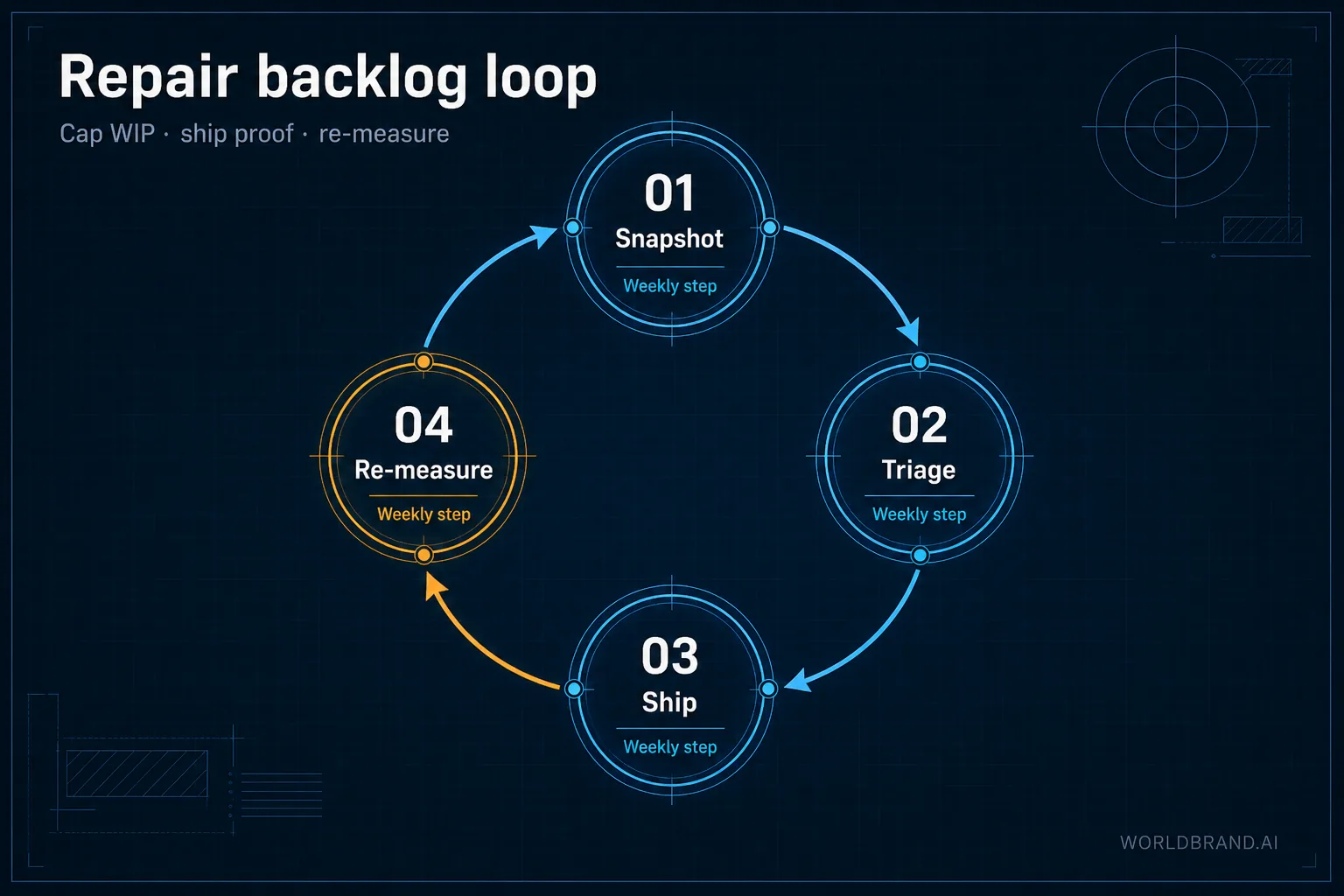
- Snapshot review → nominate candidates
- Triage into P0–P3
- Cap WIP (work in progress)—no infinite lists
- Ship
- Re-measure only the affected cluster
- Close or reopen with notes
A healthy WIP cap for most brand teams is three to five active evidence tickets. Everything else waits in a ranked queue. If everything is P0, nothing is.
Pair this flow with the weekly rhythm in From Snapshot to Operating Rhythm: scoreboard, diagnose, assign, leadership note.
Example tickets (good vs bad)
Bad: "Improve AI sentiment."
Good: "P1 — 'expensive' frame on 12 mid-market comparison prompts. Artifact: /pricing FAQ + comparison table. DRI: PMM. Success: 'expensive' mentions on that cluster fall by half on re-measure in two weeks."
Bad: "Get on Wikipedia."
Good: "P2 — category noun conflict (site vs reference sources). Artifact: About page + newsroom boilerplate. DRI: Brand. Success: same category noun on top three citeable URLs; re-check Hub profile."
Anti-patterns
- Backlog as a graveyard of 200 ideas
- Only campaign ideas, no URL fixes
- Owners named as departments
- Success = "we discussed it"
- Changing prompts instead of fixing evidence
- Closing tickets without re-measurement
- Mixing measurement debt and brand evidence without labels
How to show progress without vanity
In the leadership note, report:
- Tickets opened / closed this week
- P0 age (days since oldest critical conflict)
- Prompt clusters re-measured and what changed
- Blockers waiting on legal / product
Skip "we brainstormed twenty content ideas." That is a workshop, not a backlog.
FAQ
Who triages nominations vs owns individual tickets?
The AEO or brand-ops DRI triages snapshot findings into the ranked queue and enforces WIP caps. Fact-class owners (PMM, legal, brand, PR) own the artifact on their ticket—they do not run the backlog.
How do we attach the backlog to a meeting we already have?
Fold nomination and triage into the Tuesday AEO rhythm: diagnose one movement, assign repairs with due dates, and refuse to close the hour without tickets. Do not maintain a parallel backlog review that leadership never sees.
What should NOT count as backlog-ready?
Vibes-only items ("improve sentiment"), department owners, tickets without prompt clusters or success signals, and fixes closed without re-measurement on the affected cluster.
What happens when teams ignore the WIP cap?
Everything becomes P0, nothing ships, and each snapshot feels like the first. Treat a red dashboard with no active ticket the same way—as a process failure, not just a brand failure.
Where BrandAI fits
- BrandAEO — the scoreboard that nominates prompt clusters for repair
- Brand Hub — inspect conflicting facts while you triage tickets
- BrandWiki — reference hygiene when encyclopedic pages are the evidence gap
Bottom line
Evidence repair backlogs turn AI visibility from a panic ritual into operations. Keep tickets concrete, ranked, and re-measurable—that is how dashboards become durable advantage.